Being the official export credit agency in Türkiye, Türk Eximbank helps Turkish companies engaged in goods and services exports, overseas contracting, and investment goods manufacturing and sales increase their share in international trade by extending them credit and credit insurance support.
Being a specialized bank in export financing, Türk Eximbank has embraced it as a primary goal to achieve its predefined targets associated with export finance rather than maximizing profit. However, care is taken to pursue policies that will safeguard a healthy financial structure in keeping with the responsibility of being a bank.
Türk Eximbank initiated the “Türk Eximbank Strategic Transformation Program” with the aim of more effectively supporting our country’s export strategies and flourish the foreign trade ecosystem in line with the worldwide best practices in collaboration with its stakeholders. Under this program, Türk Eximbank is transforming into a structure that proactively supports the exporters that generate high added-value for the national economy and pursue operations in line with our country’s export strategies. The Bank identifies exporters’ needs and challenges, and takes steps to expand its product and service array targeted at their needs and improve exporters’ experience of making use of Türk Eximbank support schemes.
Domestic Loans
Türk Eximbank supports exporters, export-oriented manufacturers, companies exporting FC-earning services, and international contractors/investors with short- and medium-long-term cash credit programs. The financing support that companies will need during the production process is extended both for pre-shipment and post-shipment periods through cash loans.
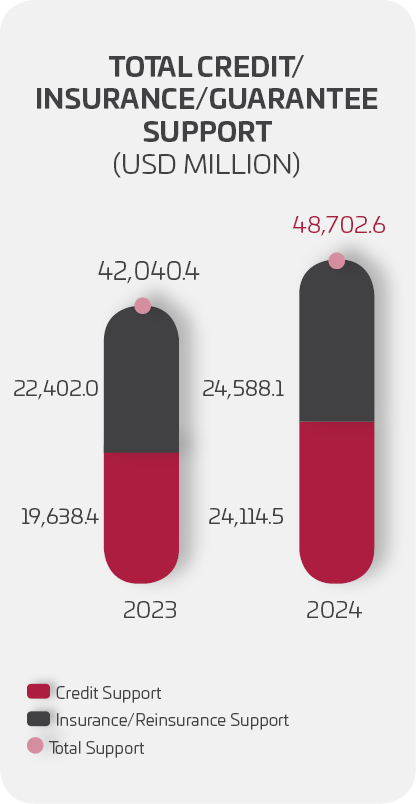
Türk Eximbank’s total credit support in 2024 amounted to USD 24.1 billion.
As of end-December 2024, the Bank’s lending comprised of:
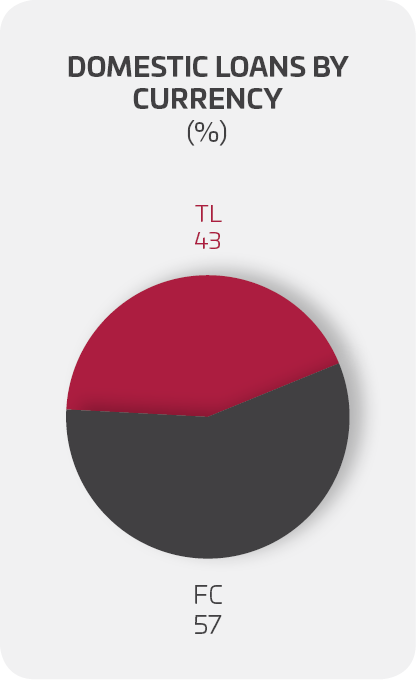
• TL loans by 43%, FC loans by 57%,
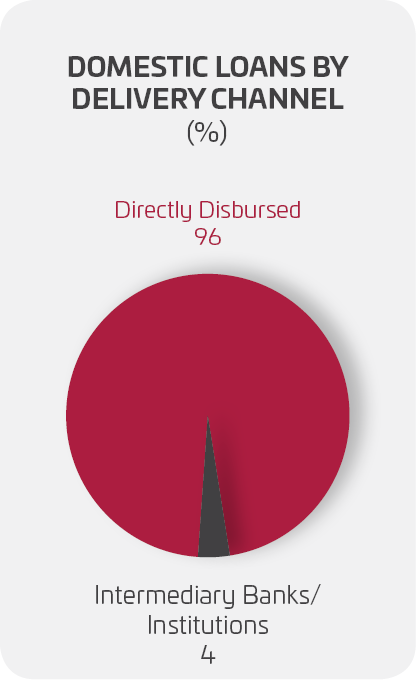
• directly disbursed loans by 96%, and loans disbursed via intermediary banks by 4%,
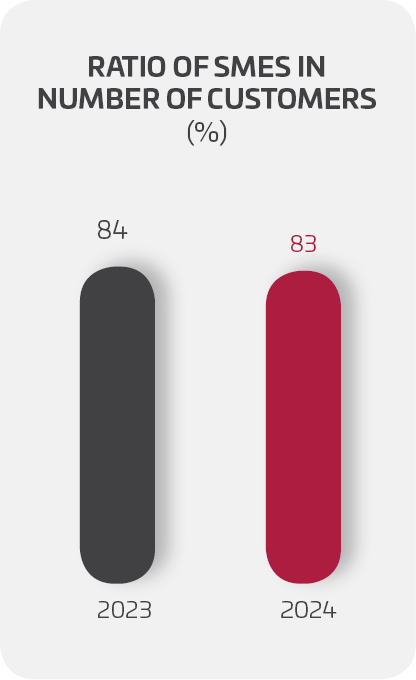
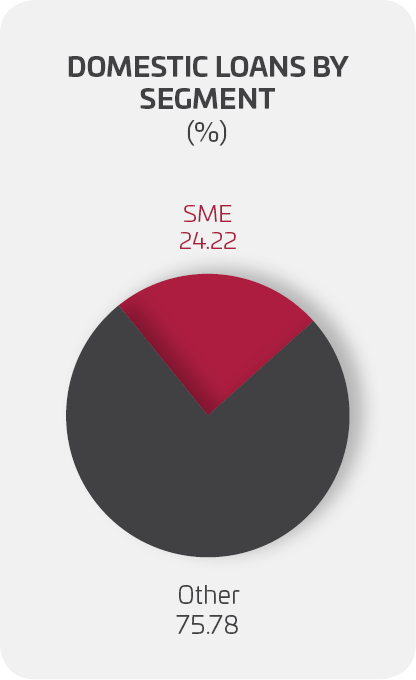
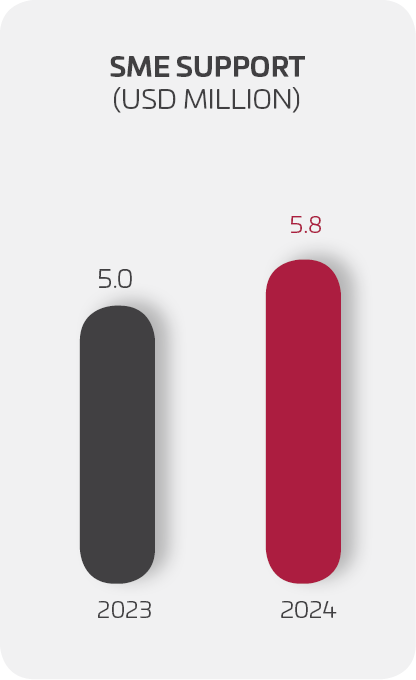
• loans made available to SMEs by 24.2% (worth USD 5.8 billion).
TL 49.5 billion was made available in loans to 4,609 firms within the scope of Export Development Inc. (İGE) guarantee.
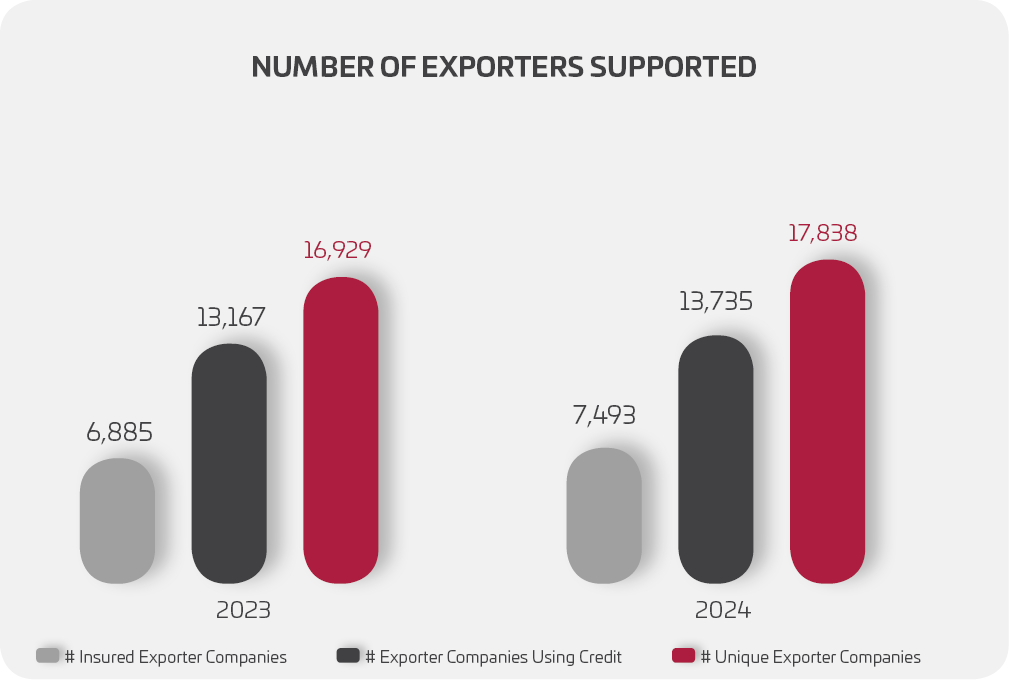
During 2024, 13,735 firms, which together accounted for a significant share of Türkiye’s total exports, benefited from Türk Eximbank’s loan programs.
Priority was given to SMEs in lending, and TL credits were predominantly used for SME financing. The SME support worth TL 99.3 billion and USD 2.9 billion for a total of USD 5.8 billion was extended as the result of the priority assigned to credit requests of firms characterized as SMEs, additional funding provided and maturity extension support. The support extended to the SMEs accounted for 24.22% of the total support figure of USD 24.1 billion.
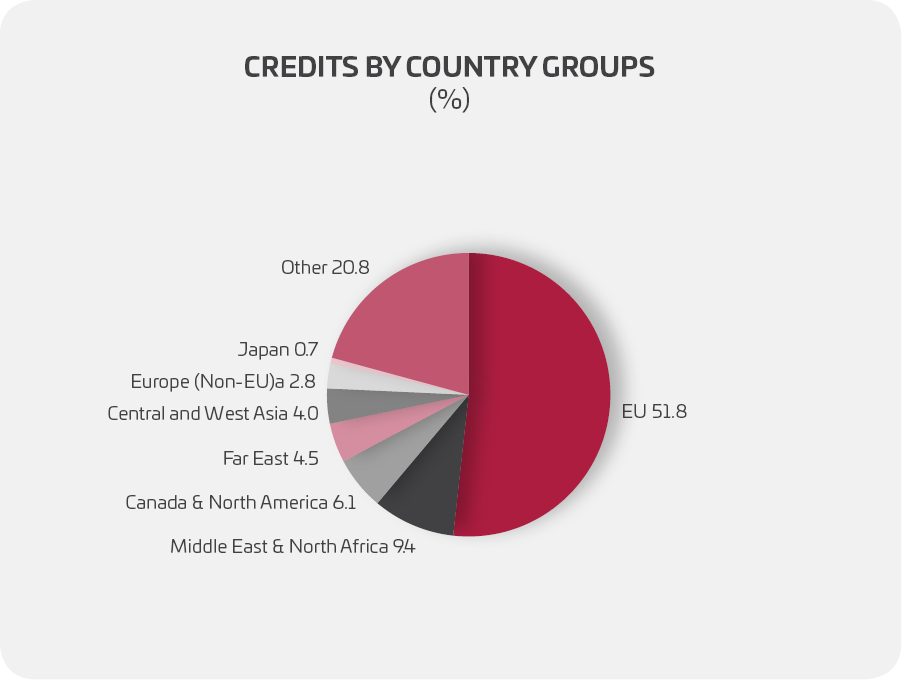
In the distribution of loans by countries to which Turkish exporters borrowing from our Bank undertake to make exportation to, EU countries lead with 52% share.
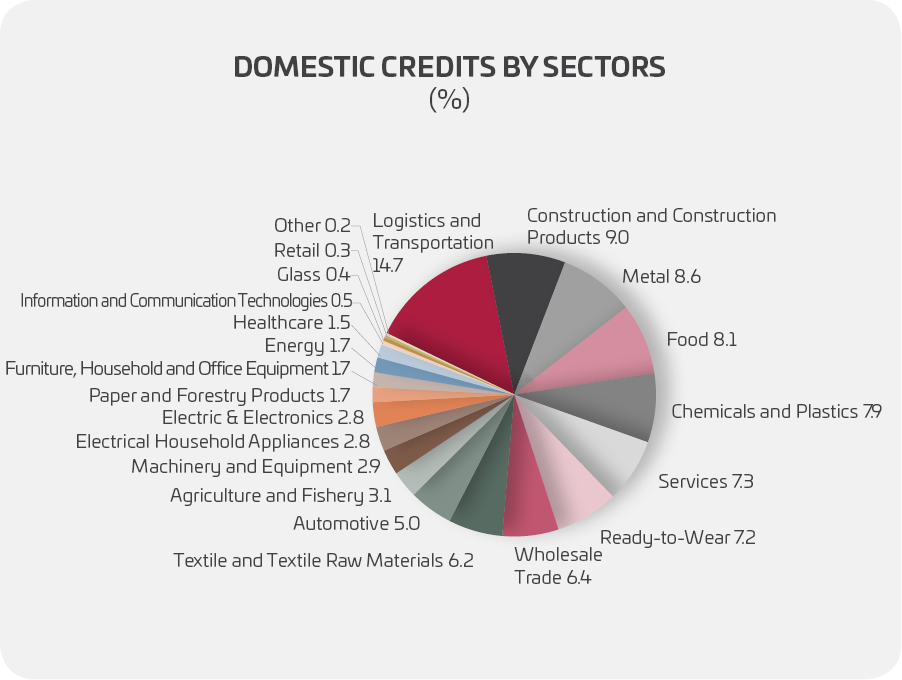
Logistics and transportation sector took the lead with 15% share in the sectoral distribution of loans.
Recent Adjustments and Changes in Domestic Credit Programs
- Maximum maturity for short-term FC credits was applied as 720 days, whereas it was applied as 10 years for medium-long-term FC credits. Additionally, fixed-rate borrowing was made available for medium-long term FC credits.
- Maximum maturity for Türk Eximbank-sourced Turkish lira loans was increased to three years, and duration-based price differentiation was carried out. TL loans, which could be disbursed solely to SME firms until this year, were made available also to non-SME companies in 2024.
- Within the frame of participation banking, products allocated through intermediary banks and financial leasing companies were brought into compliance with the principles and standards of participation banking, and Participation Pre-Shipment Export Finance and Interest-Free Financial Leasing Finance Programs have been introduced, thereby offering new financing facilities to risk-averse exporters.
- Maximum maturity was set as 720 days both for TL and FC financing for Pre-Shipment Export Credits and Pre-Shipment Export Credits allocated through participation banks.
- Organizational and systemic/infrastructural changes were made which will accelerate borrowing processes of exporters. The Limit Decision Model (LDM) introduced in January automatized the limit allocation processes pertaining to exporters’ requests up to a certain amount and subject to a certain guarantee, and limit started to be allocated within one day. As of 31 December 2024, the credit lines made available to 2,058 firms with LDM amounted to USD 925 million; out of these firms, 1,048 have been disbursed loans in the total amount of USD 222 million. Of 2,058 firms to which a limit has been allocated with LDM, 55% were new companies.
- With the aim of diversifying financing sources under the Post-Shipment Rediscount Credit, CBRT-sourced Turkish lira credit disbursements were initiated in addition to Bank-sourced FC disbursements.
- Systemic developments for broadening the use of Post-Shipment Rediscount Credits were completed, and volume growth continued at an increasing momentum; disbursements to 62 companies amounted to USD 55.1 million as of year-end.
- Türk Eximbank broadened the scope of its products and services in view of the needs that companies engaged in value-added and high-technology exportation have in accessing financing within the frame of the strategic transformation it has launched under our country’s export-oriented growth strategy. To this end, collaterals have been diversified based on approaches that take into account exporters’ “creditworthiness” together with their “export worthiness”. Accordingly, alternative collateral types generally accepted in the banking sector started to be accepted also by Türk Eximbank, including securities pledge, guarantees by guarantee agencies such as the Credit Guarantee Fund (KGF) and İGE, mortgage, guarantees by real or legal persons, as well as bank letter of guarantee and our Bank’s Export Receivables Insurance Policy.
- Under the Equity Protocol signed by and between Türk Eximbank and İhracatı Geliştirme A.Ş. (Export Development Inc. – İGE) intended to increase exporters’ access to financing and broaden the collateral diversity strategy, four different packages incorporating surety support worth TL 6 billion were introduced, which prioritize high added-value exports.
- Applications continued to be received through the “İGE Surety Portal” application, from which member banks are able to obtain the information they may need to determine the creditworthiness of an exporter applying for surety, view the requested credit information, and deliver and revise their proposals.
- İGE Equity Surety Support Package upper limits were updated, and surety upper limits were increased to TL 45 million for SME beneficiaries and TL 90 million for non-SME beneficiaries. Furthermore, the lower surety limit of expert opinion assessments created for the evaluation of non-SME beneficiaries’ applications for TL 30 million and higher was increased to TL 45 million, and disbursements continued for applications that have been assessed within the scope of expert opinion.
- The surety upper limit was increased to TL 2 billion and a total of TL 2 billion was disbursed in credits backed by Treasury-surety to 232 firms under the “İGE 100th Year Treasury Support Package” signed by and between Türk Eximbank and İGE.
- Furthermore, work was completed for the enforcement of the “Foreign Currency Surety Support Package”, which entails the provision of a surety of TL 31.5 billion by İGE for FC loans Türk Eximbank will disburse for the financing of exporters’ operating expenses.
- Rediscount Credit Based in Swap Agreements launched under CBRT Rediscount Credits, which were introduced with the aim of increasing international competitive strength of manufacturers producing goods for export, manufacturers/exporters and exporters, and firms undertaking FC-earning services, and of fulfilling their need for financing during their preparation for exportation, are being disbursed since December 2022. Rediscount Credits Based in Swap Agreements made available to 126 firms in 2024 amounted to CNY 288.7 million (USD 40.1 million).
- The scope of Overseas Letter of Guarantee Program was expanded, which step paved the way for the issuance of letters of guarantee in favor of non-resident partnerships in which firms allocated a non-cash limit at Türk Eximbank hold 50% or higher shareholding interest. Furthermore, FC-earning services and activities were included within the program scope.
- Türk Eximbank signed an agreement to obtain funds in the amount of EUR 150 million from the Council of Europe Development Bank (CEB) so that our Bank will be able to finance the operating capital and investment finance needs of manufacturers that produce final goods for exportation and export these goods via an exporter although they are not in the capacity of an exporter or manufacturer/exporter or exporter and of companies undertaking FC-earning services and activities with medium-long term facilities. The second tranche of the fund, which was obtained in tranches under the agreement signed on 13 December 2022 under the guarantee of the Republic of Türkiye Ministry of Treasury and Finance, continued to be disbursed in 2024.
- Under The Islamic Corporation for the Insurance of Investment and Export Credit (ICIEC) insurance, the Bank and ING on-lent USD 125 million to 187 exporters from out of the EUR 115 million-fund with a total maturity of 5 years.
- Out of the USD 20 million-fund secured from the Emirates NBD, USD 20 million in total was disbursed to four exporters.
- On 14 August 2024, a source for the amount of EUR 300 million was obtained from a consortium of banks, in which 95% of the principal amount and interest risk is guaranteed by the Multilateral Investment Guarantee Agency (MIGA), a member of the World Bank. Support was provided to 243 firms through this fund which was on-lent in its entirety.
- On 22 March 2024, a EUR 140 million-fund with a maturity of 10 years was secured from a consortium of banks, which is 100% insured by NEXI, the Nippon Export and Investment Insurance Corporation of Japan and under the repayment guarantee of the Republic of Türkiye Ministry of Treasury and Finance. Through the fund that has been wholly disbursed, support was extended to 47 firms.
- Funds in the amounts of USD 100 million was secured from the Asian Infrastructure Investment Bank (AIIB) under the Earthquake Relief Package and USD 258.7 million under the Green Infrastructure Support Package, and USD 80 million was on-lent to 24 firms from the former and USD 59.1 million to 10 firms from the latter as of 31 December 2024.
- “Türkiye Green Exports Project” for the amount of EUR 1 billion in total was introduced, which is under the counter-guarantee of the Republic of Türkiye Ministry of Treasury and Finance and the guarantee of the International Bank for Reconstruction and Development (IBRD), a member of the World Bank. Under the project, USD 62.7 million has been made available in loans to 11 firms as of year-end.
- Work has been completed for the disbursement of the Murabaha Financing (Sales with Profit Statement) and Istisna Financing Programs in Turkish lira.
- During 2024, funds for the amount of USD 50 million was secured from the Sharjah Islamic Bank, USD 25 million from Ajman Bank, USD 174 million from the Islamic Development Bank and USD 45 million from the Black Sea Trade and Development Bank, which are required to be on-lent using the murabaha method.
- In line with Türk Eximbank’s digitalization targets, work was completed for service provision using API (Application Programming Interface) services instead of the online branch platform on which business processes associated with Pre-Shipment Export Credit Program are carried out for shortening operational task processes and for faster execution of credit procedures more securely. Work is ongoing for the integration of intermediary financial institutions.
- The Bank’s internal bylaws were revised for process improvement purposes and for achieving alignment with exporter demands, market requirements and changes in foreign legislation.
Actualizations on the basis of Domestic Credit Programs (USD billion)
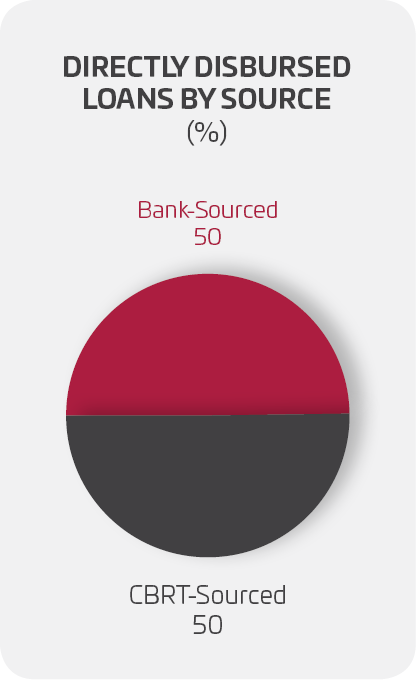
Direct Disbursements |
23.1 |
Bank-Sourced Loans |
11.5 |
CBRT-Sourced Loans |
11.6 |
Intermediary Bank/Institution Loans |
1.0 |
Loans Extended via Intermediary Banks/Financial Institutions* |
1.0 |
Total |
24.1 |
* A minimum portion of 30% of the credit lines allocated to intermediary banks must be disbursed to SMEs; accordingly, loans worth USD 769 million were allocated to SMEs through intermediary banks during 2024 (81.2%).
Buyer’s Credits Programs
Buyer’s Credits and Project Finance Programs, under which projects undertaken abroad by Turkish contractors and the buyers (public and private) of Turkish goods and services in foreign countries, are intended
- to increase Türkiye’s exports,
- to diversify the goods and services exported,
- to acquire new markets for export goods,
- to increase the share exporters get from international trade,
- to provide competitive strength and assurance to Turkish firms in international markets.
Within the context of Buyer’s Credits, debtors are directly governments, the buyer country’s state-guaranteed public institutions or overseas/domestic banks within the allocated limits.
In line with the Bank’s strategic goals, efforts were initiated in 2024 for providing project finance to infrastructure and superstructure projects abroad employing the project finance model, in addition to buyer’s credits. By expanding its product and service array with project finance model, Türk Eximbank targets to help grow Türkiye’s exports and increase support mechanisms to external investments.
To add momentum to Buyer’s Credits and Project Finance Programs, and hence, to help grow the exportation of Turkish goods and services, cooperation was established and revolving loan agreements were signed with non-resident commercial banks, development banks and multi-lateral agencies that are acceptable to the Bank in order to overcome the hardships the debtors face in securing state guarantee and to extend support to the private sector transactions as well. In addition, in line with Türkiye’s Africa Partnership Policy, Türk Eximbank has become a shareholder representing Türkiye in Africa Finance Corporation’s (AFC), a multilateral institution in Africa. The shareholding enabled cooperating with AFC for supporting the projects in Africa, and work was commenced on co-financing and risk sharing models. (Click here↘ to reach detailed information about the acquisition of equity stake in AFC.)
While the stagnation that resulted from the Covid-19 pandemic that took the whole world in its grip from the onset of 2020 was largely shaken off as of 2023, its effects are not totally over. The war that broke out in February in 2022 between Russia and Ukraine, two key trade partners of Türkiye that are also its Black Sea neighbors, fluctuated energy and agricultural commodity prices. Prices converged back on historic average and followed a stable course throughout 2024 owing to the financial conditions tightened in 2023 coupled with declined demand. The measures taken by central banks that managed their reserve currencies as part of their combat against the resulting high inflation resulted in high borrowing costs for developing countries. In 2024, however, upon commencement of the disinflation process, tight monetary policies implemented for anti-inflationary efforts were taken over by rate cuts. Notwithstanding, the uncertainties hovering over global activities urge central banks to adopt a more cautious approach to rate cuts. In addition to these developments, the significantly restrained state-guaranteed borrowing opportunities available to Turkish exporters and contractors due to the agreements the countries they pursue activities in have with other international institutions limited the demands for buyer’s credits for overseas contracting and export transactions.
Under the Buyer’s Credits and Project Finance Programs of Türk Eximbank, letters of intent continued to be issued, which help exporter companies and contractors undertake new projects particularly when developing business in risky markets. During 2024, 20 “Letters of Intent” were issued for project and trade finance planned to be undertaken by Turkish companies across 10 countries in total in Africa, Asia and Europe.
In addition, the Bank participated in the meeting of the Environment Practitioners Group organized under the OECD roof, and contributed to the formation of our country’s position and opinions.
Under the existing overseas bank analysis and credit line allocation methodology, a total credit line of USD 524 million of which USD 250 million is non-cash was allocated to 8 banks, 2 of which are multinational banks. Hence, the transaction coverage totaled 49 countries via the member countries of multinational banks.
Actualizations on the Basis of Projects/Deals under Buyer Credit Programs
Within the scope of the State-Guaranteed Buyer’s Credits Program, disbursements are ongoing under the credit agreement for the amount of USD 200 million signed in 2018 between the Tunisian Ministry of Development, Investment and International Cooperation and Türk Eximbank; in this framework, USD 26 million has been provided in 2024. Under the same program, a USD 65.9 million-facility has been allocated for the planned goods and equipment exports to Uzbekistan.
Türk Eximbank increased its partnerships with other export credit agencies in line with its goal to strengthen its international cooperations and added significant pace to its operations carried out within the scope of reinsurance transactions. In this framework, contribution was provided to growing reinsurance capacity, supporting exporters and diversifying international financing facilities, and reinsurance support was extended for two different deals in 2024 within the scope of the agreements made with other countries’ export credit agencies.
As stated in the Paris Club’s press release of May 2023, the Creditors Committee that includes Türkiye has been established for the state of Ghana’s request for debt restructuring under the Common Framework, and Türk Eximbank attended the meetings of the Committee along with officials from the Republic of Türkiye Ministry of Treasury and Finance. In this framework, Türk Eximbank signed the Memorandum of Understanding (MoU) concerning Ghana’s credit debt restructuring and the state of Ghana’s debts to the Bank will be restructured as set out in the MoU.
In 2021, the state of Ethiopia requested debt restructuring under the “Common Framework”, and it has been reported that a Creditors Committee has been set up. Türk Eximbank attends the meetings of the Paris Club Creditors Committee along with the officials from the related Ministry, and the developments about that country are closely monitored.
On the other hand, USD 117.5 million has been collected from our debtors during 2024 under the Buyer’s Credits and Project Finance Programs.
Receivable Insurance
Being the largest receivable insurance agency of our country, Türk Eximbank ensures bold steps to be taken by exporters in foreign trade. Enabling secure collection of exporters’ future receivables since 1989, Türk Eximbank included medium/long-term exports of goods and services within insurance coverage with the Specific Export Credit Insurance Program that was introduced in addition to the Short-Term Export Credit Insurance Program.
During 2024, shipments with a total worth of USD 24.6 billion were insured under Short-Term Export Credit Insurance, Short-Term Domestic Credit Insurance and Specific Export Credit Insurance.
Through its insurance programs, the Bank provides insurance coverage for exports to countries covered under the insurance against losses arising from commercial and political risks arising from the importer firm and importer’s country. In addition, domestic receivables of exporters are protected against commercial risks also through domestic credit insurance as well as export credit insurance.
Moreover, obtaining a credit from financial institutions is facilitated by putting up credit insurance policies as collateral.
During 2024, shipments with a total worth of USD 24.6 billion were insured under Short-Term Export Credit Insurance, Short-Term Domestic Credit Insurance and Medium-Long Term Export Credit Insurance.
In 2024, reinsurance continued to be obtained from domestic and overseas companies for 50% of commercial and political risks (pertaining to OECD non-member countries) assumed within the frame of Receivable Insurance Programs.
In 2024:
- In order to satisfy exporters’ current needs and demands, the scope of FC-earning service receivables that can be covered under our Bank’s Service-Added Short-Term Export Credit Insurance Policy has been expanded.
- Short Term Export Credit Insurance, Short-Term Domestic Credit Insurance, Service-Added Short-Term Export Credit Insurance and Participation-Based Receivable Insurance Policies have been revised.
- Momentum was given to creation of Islamic banking products, and Participation-Based Export Receivables Insurance Program has been introduced.
- The Reinsurance, Brokerage Channel Management and Product Development Unit, which was set up for letting the marketing and sales activities of Türk Eximbank’s Receivable Insurance Policies be carried out via insurance brokerage firms, in addition to the Bank’s branches and Regional Insurance Marketing and Coordination units, makes cooperation agreements with brokerage firms, and the Türk Eximbank Brokerage Channel works actively.
- Expansionary revisions were made to insurance policies in order to make the partially-implemented indefinite limit applicable to all buyers, which enhances customer satisfaction and increases efficiency in insurance transactions, and alleviates workload.
- “Türk Eximbank Insurance Agency Structure with Financial Institutions” project has been introduced as an alternative sales/marketing channel to enable sales and marketing of existing receivable insurance products directly to exporters through financial institutions (commercial banks and participation banks).
Short-Term Export Credit Insurance
The Short-Term Export Credit Insurance Program provides cover for all shipments of exporters up to 360 days against commercial and political risks.
Offered since 1989 by Türk Eximbank, Short-Term Export Credit Insurance became a service recognized and extensively used by exporters in time. As a result, 7,458 export firms were making use of the service as of 2024 year-end.
Under the program, exports worth USD 21.5 billion was provided with insurance cover in 2024, and premiums in the amount of USD 69.4 million were collected for the insured shipments.
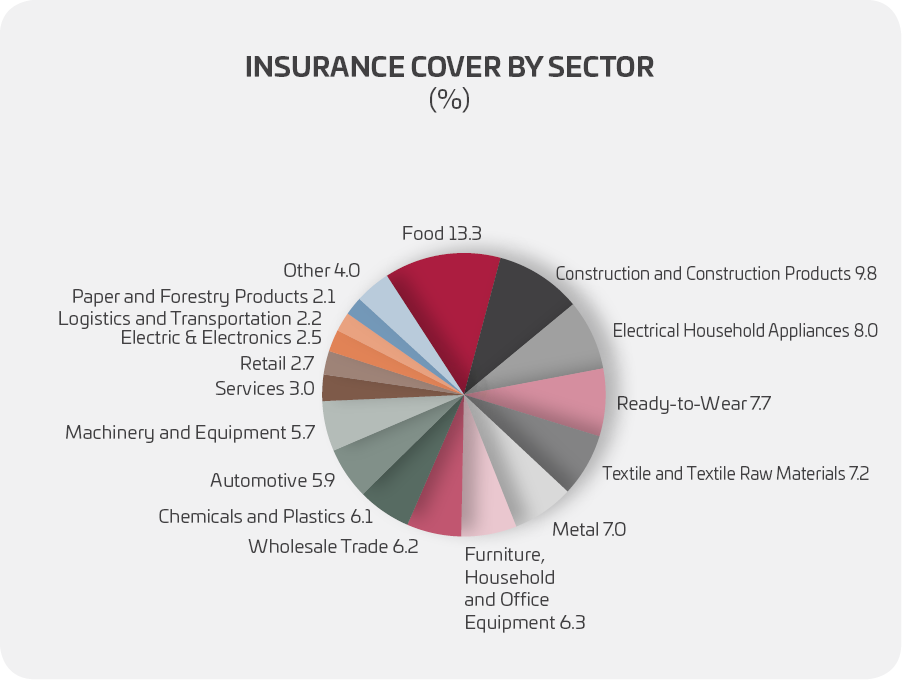
In the sectoral distribution of insured shipments, food industry took the lead with 13% share, followed by construction and construction products industry with 10% share, and electrical household appliances and ready-to-wear and garment industry with 8% share each.
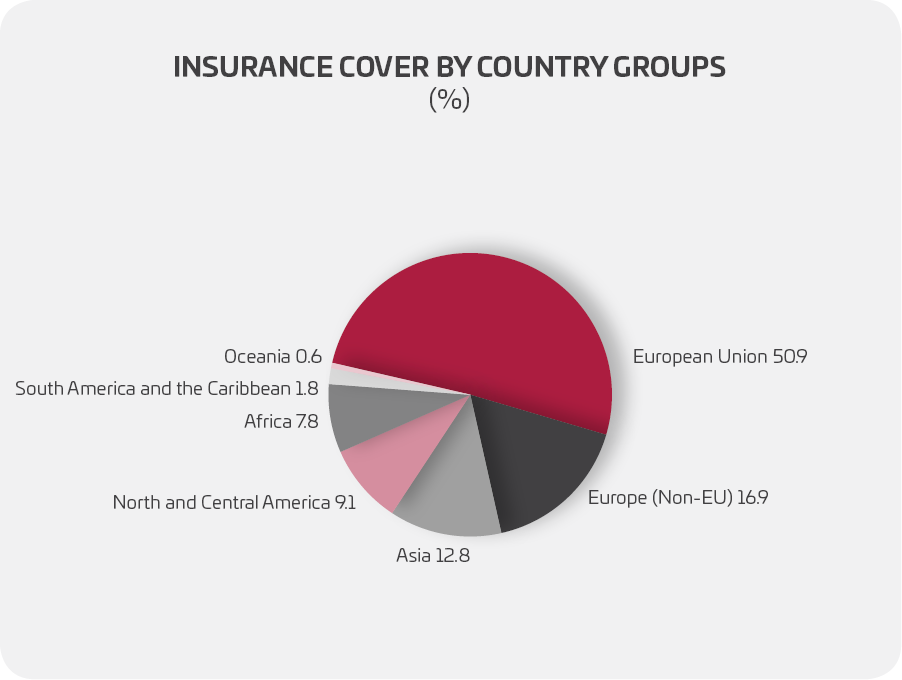
The regional distribution, however, is topped by European (European Union and non-EU combined) countries with 68% share, whereas Asia ranked second with 13% share and North and Central America ranked third with 9% share.
The number of buyers granted consistent limit under the Short-Term Export Credit Insurance Program is 54,814.
In 2024, Türk Eximbank indemnified USD 22.9 million in losses, which arose from shipments to various countries and the receivables from which could not be collected when due, under the Short-Term Export Credit Insurance Program. In the same period, Türk Eximbank recovered a portion of USD 5.9 million out of the losses indemnified before.
Short-Term Domestic Credit Insurance
Short-Term Domestic Credit Insurance program for exporters and their group companies is another area of insurance that Türk Eximbank is engaged in.
With this program, receivables of exporters and group companies having a Short-Term Export Credit Insurance Policy from credit-sale shipments up to 360 days, which are associated with their domestic operations, are insured against commercial risks within specified limits.
As of year-end 2024, 204 firms’ shipments worth USD 2.9 billion were insured. Premiums in the amount of USD 6.9 million was collected for the shipments insured, while claims paid amounted to USD 226 thousand.
Specific Export Credit Insurance
Exporters’ receivables arising from shipments born out of a single sales contract with a maximum term that is defined in line with OECD rules are provided coverage with Specific Export Credit Insurance. Under the program, sales through overseas subsidiaries can also be insured besides exports of Türkiye-origin investment goods and services of export companies.
Other Insurance Programs
Developments regarding other insurance programs offered by Türk Eximbank are as follows:
- Participation-Based Receivable Insurance: The program provides cover for export receivables with a maximum maturity of 360 days arising from exporters’ goods sales aligned with Islamic banking principles and standards to non-resident buyers against commercial and political risks
- Pre-Shipment Risk Insurance: The program provides insurance coverage for potential losses directly associated with production costs that an exporter might sustain in the event that the order is cancelled by the buyer during the production phase in connection with commercial and political risks.
- Financial Institutions Buyer’s Credit Insurance: The program that is offered for banks provides insurance coverage for losses sustained by the creditor due to the borrower’s non-repayment of the buyer’s credits provided by domestic and overseas financial institutions for exportation of Turkish goods and services.
- Overseas Contracting Services Political Risk Insurance: The program aimed at contractors, on the other hand, provides insurance coverage for potential losses Turkish contractors may sustain in relation to their overseas projects as a result of political risks.
- Letter of Credit Confirmation Insurance: The program, on the other hand, insures losses sustained by the confirming bank in the event that letters of credit opened by an overseas issuing bank, to which the confirmation of a domestic bank is added, shall have not been paid by the issuing bank due to commercial and political risks.
Financing and Treasury
In 2024, Türk Eximbank secured funds in the amount of USD 8.4 billion from international markets and an additional USD 3.2 billion within the scope of funding from treasury transactions (repurchase agreements, TRS, swaps, etc.) and kept offering low-cost financing facilities with various maturities from its fund stock maintained at USD 11.9 billion level, excluding CBRT funds. The Bank’s total fund stock including TL funds and USD 9.7 billion CBRT rediscount facility was registered as USD 21.6 billion. On the other hand, principal repayment by the Bank amounted to approximately USD 5.7 billion (excluding treasury transactions) during the reporting period.
Türk Eximbank’s total fund stock including TL funds and USD 9.7 billion CBRT rediscount facility was registered as USD 21.6 billion.
Borrowing Transactions
TL funds derived within the scope of paid-in capital and interest collections were used for funding almost the entirety of TL loans disbursed in 2024, excluding Rediscount Credits.
The details about the Bank’s borrowings in 2024 are presented below:
- Türk Eximbank heavily utilized the promissory note rediscount facility of the Central Bank of the Republic of Türkiye (CBRT). As of 31 December 2024, the balance of these resources including TL Rediscount Credits amounted to USD 9.7 billion.
- Besides the funds derived from treasury transactions (repo, TRS and borrowing), Türk Eximbank obtained sources worth USD 8.4 billion in total in 2024. Within these funds, USD 3.6 billion comprised of supranational funds obtained within the scope of sustainability and sustainability-linked syndication loan.
- Loans worth USD 832 million were supplied from non-resident major financial institutions under bilateral agreements.
- Funds secured from international capital markets amounted to USD 3.6 billion, comprised of a Eurobond issue worth USD 500 million carried out in January 2024 and through private placements made from the onset of the year.
- A USD 100 million-fund was secured in January 2024 based on the credit agreement signed for a 10-year facility with the Asian Infrastructure Investment bank (AIIB) under the guarantee of the Republic of Türkiye Ministry of Treasury and Finance in December 2023 for financing various expenses like earthquake-caused repair, maintenance, reconstruction, machinery replacement, reinforcement and the like incurred by Turkish exporter firms affected by the earthquakes of 6 February 2023.
- The fifth sustainability-linked syndicated loan carried out in May 2024 renewed the previous facility with a roll-over ratio of 110% and a total fund of USD 728 million with a 1-year term was secured, comprised of EUR 560 million and USD 120 million.
- In May 2024, a USD 285.7 million-fund was secured under a 10 year-term syndicated loan agreement under the guarantee of Asia Infrastructure Investment Bank (AIIB) and counter-guarantee of the Republic of Türkiye Ministry of Treasury and Finance for offering long-term financing to exporters’ renewable energy generation and green investments.
- A EUR 75 million-fund was received in June 2024 as the second tranche of the credit agreement signed in December 2022 with the Council of Europe Development Bank for a facility in the amount of EUR 150 million with a maximum maturity of seven years under the guarantee of the Republic of Türkiye Ministry of Treasury and Finance.
- In June 2024, a EUR 115 million-fund was secured under the 5-year agreement signed in April 2024 with ING under the insurance of ICIEC, a Sharia-compliant multilateral insurance company and a member of the Islamic Development Bank (IsDB) Group.
- In June 2024, a EUR 1 billion-fund was obtained under the “Türkiye Green Export Project“ credit agreement which is in syndicated loan structure to assist Turkish exporters with overcoming the challenges that may arise from the European Union’s Carbon Border Adjustment Mechanism (CBAM) and which was signed in May 2024 under the counter-guarantee of the Republic of Türkiye Ministry of Treasury and Finance and the guarantee of the International Bank for Reconstruction and Development (IBRD). The facility was named the “Development Finance Institution Loan Deal of the Year” by Global Banking & Markets.
- In August 2024, a EUR 300 million-fund was obtained under a one-year contract in syndicated loan structure for fulfilling Turkish exporters’ trade finance needs under the guarantee of MIGA.
- In August 2024, a EUR 140 million-fund was secured based on the agreement with a maturity of 10 years signed in March 2024 with a consortium of banks, which is 100% insured by NEXI, the Nippon Export and Investment Insurance Corporation of Japan and under the guarantee of the Republic of Türkiye Ministry of Treasury and Finance. The facility was named the “Trade Finance Deal of the Year” by Global Banking & Markets.
- In November 2024, an Islamic-fund agreement with a maturity of 10 years and for the amount of USD 100 million was signed with the Islamic Development Bank under the guarantee of the Republic of Türkiye Ministry of Treasury and Finance.
- The sixth sustainability-linked syndicated loan carried out in November 2024 renewed the previous facility with a roll-over ratio of 121% and secured a 1-year and 2-year source of USD 796 million in total, which consisted of EUR 367.7 million, USD 297 million and CNY 700 million.
- In December 2024, an Islamic syndicated loan worth approximately USD 174 million in total with a 1-year maturity, comprised of USD 164 million and EUR 9.5 million, was obtained, which was coordinated by ITFC (International Islamic Trade Finance Corporation), the trade finance arm of the Islamic Development Bank.
- In December 2024, a USD 45 million-fund with a maturity of 2 years was secured from the Black Sea Trade and Development Bank.
Furthermore, the Bank obtained USD 3.2 billion in funds secured through treasury transactions (repurchase transactions, TRS, borrowings, swaps, etc.). As at year-end 2024, the existing fund stock is in the order of USD 1.04 billion.
Fund Management Activities
Türk Eximbank kept a close eye on national and global developments, and paid maximum attention to liquidity, interest rate and exchange rate risks management, taking into account such issues as interest and exchange rates, global macroeconomic conjuncture, and return-cost balance in 2024.
As part of liquidity management, existing sources (shareholders’ equity, funds generated through borrowings from money and capital markets) were invested in CBRT, Takasbank Money Market and interbank market, and high interest income was achieved.
The liquidity ratio in total assets, which was kept within the legal limits set out in the BRSA Regulation Concerning Measurement and Evaluation of Liquidity Adequacy of Banks, averaged 6.9% throughout 2024, and the share of securities portfolio in total assets was 3.7% in average.
In the reporting period, the Bank carried on with short- and long-term swap operations for cash flow management and assets and liabilities harmonization purposes. Türk Eximbank’s swap operations in 2024 aimed at managing the Bank’s cash flow more effectively and ensuring asset-liability harmony, as well as for arbitrage purposes, were worth USD 18.9 billion, of which USD 18.4 billion was in short-term and USD 0.5 billion was kept in long-term.
Hedge accounting continued to be implemented in order to prevent fluctuations on the income statement resulting from interest and cross-currency swaps carried out for harmonizing FC funds secured from international markets through bond issuances or other borrowings with the assets composition.
Treasury products continued to be offered with the purposes of protecting exporters’ competitive strength in global markets, and strengthening their ability to manage the exchange rate risk stemming from FC receivables and FC liabilities and the interest rate risk that might arise from interest rate fluctuations.
International Relations
There are over 60 agreements of various cooperation mechanisms that Türk Eximbank signed with the export credit agencies of 43 countries, as well as multilateral financial institutions. The Bank sustained its close cooperation with these institutions and its efforts for signing new agreements also in 2024.
There are over 60 agreements of various cooperation mechanisms that Türk Eximbank signed with the export credit agencies of 43 countries, as well as multilateral financial institutions.
In 2024, work continued to add new ones to the reinsurance agreements signed in earlier years with USEXIM (USA), UKEF (UK), BPIFrance (France), EKF (Denmark), OeKB (Austria), MEHIB (Hungary) and EKN (Sweden) to enable co-financing of projects that Turkish exporters and contracting firms will undertake in third countries in cooperation with foreign firms, and thus, contribute to increase their competitiveness. Reinsurance agreements were signed by and between our Bank and KUKE, the official Polish export credit agency, and QDB, Qatar Development Bank, targeted at co-financing the transactions that the companies of the two countries will undertake in third countries. The reinsurance agreement signed with QDB will allow supporting the projects in third countries with financing facilities that are compliant with participation banking principles that Türk Eximbank has recently been attaching importance to in terms of new product developments. Furthermore, memoranda of understanding were signed for general cooperation with CESCE and Kazakhexport, the official export credit agencies of Spain and Kazakhstan, respectively.
Türk Eximbank attended and contributed to the meetings of OECD Export Credits and Credit Guarantees Group, which was established to facilitate information and opinion exchange between member countries’ related institutions regarding officially supported export credits and of which Türkiye became a permanent member in April 1998, particularly in the negotiations for revising OECD Guidance on Environmental and Social Impact Assessment.
The Bank participated in and contributed to the negotiations concerned with the arrangement that bears importance as it sets out the minimum terms and conditions associated with export credits that participant countries will provide and that were addressed in OECD’s Participants to the Arrangement on Officially Supported Export Credits, within which the Bank acquired “invited participant” status in 2006 and “participant” status in 2018.
Being a member of the Berne Union (the International Union of Credit and Investment Insurers), Aman Union (DHAMAN [The Arab Investment and Export Credit Guarantee Corporation] and Commercial & Non-commercial Risks Insurers & Reinsurers in Member Countries of Organisation of Islamic Cooperation), AEBF (Asian Exim Banks Forum) and ADFIMI (Association of National Development Finance Institutions in Member Countries of the Islamic Development Bank (IDB)), Türk Eximbank participated in the said associations’ meetings, seminars and workshops held in 2024. The Bank attended and contributed to the meetings of Aman Union, on the Executive Committee of which it sits as a member, which were held for the establishment of their strategies and goals for the coming period. The Bank maintained its position as the member of the Audit Board of ADFIMI.
Türk Eximbank signed a shareholding agreement with AFC, a leading multilateral financial institution of Africa and became the first non-African shareholder in AFC.
Participation in Africa Finance Corporation as a Shareholder
Being Türkiye’s official export credit agency, Türk Eximbank signed a shareholding agreement with the Africa Finance Corporation (AFC), one of Africa’s key multilateral financial institutions and became the first non-African shareholder in AFC. Critical with respect to Türkiye’s Strategic Partnership with Africa Union Policy, this investment is intended to increase the project undertaking capacity of Turkish exporters and contractors in the country, especially in AFC-member 44 African countries.
The cooperation between AFC and Türk Eximbank was crowned with the Risk-Sharing Blanket Agreement signed with AFC. This agreement is planned to facilitate Turkish companies’ involvement in the infrastructure projects and foreign trade transactions in the continent and to positively contribute to our trade volume.
Information Technologies
The service network is braced with the latest technology to fulfill exporters’ needs.
Türk Eximbank continues to ensure both speed and productivity and to efficiently use resources by backing its service infrastructure with new technologies in the light of the advances in information technology.
Projects carried out to fulfill exporters’ needs and facilitate their transactions:
Within the scope of Türk Eximbank’s efforts to speed up its electronic transformation processes and digitalize its internal and external processes:
- Credit processes were integrated with İGE.
- Support was extended to efforts in relation to Main Banking practices; Early Warning System, Knock Out and Limit Decision Module were developed using new technology and launched.
- Information systems investment was made; Online Branch and Mobile Branch screens were transformed into a current and new infrastructure, and then launched.
- Work was commenced to create a datamart that will form the basis of self-serve reporting on corporate data, which has been developed for issues that concern all stakeholders in line with the target of “Increasing Analytical Maturity”.
In addition to the above:
- Main banking database, server, data storage and backup systems were upgraded to capture the advancements in technology as part of business continuity activities. Furthermore, physical server environments were migrated to the virtualization platform for operational efficiency and energy efficiency purposes, which resulted in a virtualization ratio of 99%.
- Bank Business Continuity testing was carried out throughout the year, and work was undertaken regarding compliance with the ISO 27001 Information Security Management System Standard and the Regulation on Banks’ Information Systems and Electronic Banking Services.
- Significant IT-related findings from independent audit, internal audit and information security vulnerability (penetration) tests were remedied.
- Disbursement, collection and other processes of country loans within the scope of State-Guaranteed and Buyer’s Credits Through Foreign Banks Programs were improved using new technologies.
- RPA (Robotic Process Application) developments continued for execution of certain tasks in operational processes by robotic software and thus increasing efficiency in work flow.
- New network and system security products were put into operation, and the level of security maturity was increased.
- The Data Center was relocated to the new building within the scope of the Business Continuity Management Plan. With this move, information systems components have been positioned in a data center at Tier-3 design industry standard. Main Data Center and the Disaster Recovery Center (DRC) network structure topology were synchronized. The work carried out on the infrastructure shortened the time for switching on the host systems from the auxiliary data center.
International Obligations
Work is ongoing to harmonize Türk Eximbank programs with WTO, OECD and EU guidelines, and these rules are taken into consideration in the programs implemented.
Work is ongoing to harmonize Türk Eximbank programs with WTO, OECD and EU guidelines, and these rules are taken into consideration in the programs implemented.
International Rules
In the programs it implements, Türk Eximbank must comply with the norms of the World Trade Organization (WTO), the OECD and the EU, as well as with other international regulations in connection with Türkiye’s obligations in relation to its membership of the WTO, the OECD ECG and OECD Participants Group, and in relation to the agreement of the Customs Union and the EU accession process. Accordingly, work is ongoing to harmonize Türk Eximbank programs with WTO, OECD and EU guidelines, and these rules are taken into consideration in the programs implemented.
In 2024, the Bank continued to attend the meetings of OECD Export Credits Group (ECG) which aims to evaluate policies, identify problems and provide solutions by multilateral discussions on export credits, and closely monitored the developments. In all of its practices, the Bank adheres to the three recommendations that emerged from the studies at these meetings:
- OECD Recommendation on Bribery and Officially Supported Export Credits,
- Recommendation on Environment and Social Due Diligence,
- Recommendation on Sustainable Lending Practices and Officially Supported Exports Credits.
Upon our country’s acquisition of Participant Status in the PG in 2018 where it was an “Invited Participant” (observer) since 2006, it has become part of the decision mechanism for revisions to the OECD Arrangement that sets the rules governing officially supported export credits with maturities over two years provided by the member countries, and all rules associated with export credits became binding upon Türk Eximbank as well.
Harmonization with the EU Acquis
The Bank’s activities are covered under the “Competition Policy” and “External Relations” chapters of the EU Acquis, with which harmonization is to be achieved.
- “Competition Policy” chapter: Pursuant to an EU rule, which states that marketable risks associated with short-term export credit insurance must be incurred by entities that do not receive governmental assistance, all of the Bank’s short-term insurance activities will need to be organized under a separate entity within the frame of harmonization efforts with the EU Acquis. With respect to restructuring activities that will come up within the frame of the said EU Directive, it is anticipated that a joint project with all stakeholders will take place in accordance with the instructions of the Ministry of Treasury and Finance.
- “External Relations” chapter: Medium and long term financial supports to be provided by Türk Eximbank have been aligned to a large extent with the EU Acquis, which includes OECD Regulation on Officially Supported Export Credits, following the participant status acquired by Türkiye in relation to the said Regulation in 2018.